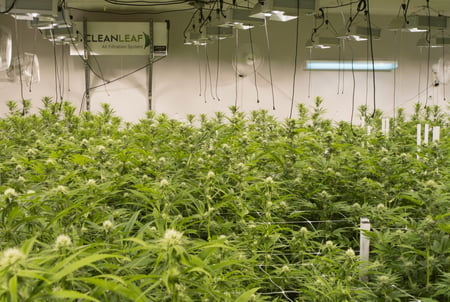
Navigating Microbial Regulations in Cannabis Production
Summary
Microbial contamination in cannabis products poses serious health risks, particularly for immunocompromised consumers, and regulators across the country are responding with increasingly rigorous testing requirements. But with no federal standard in place, the rules vary widely from state to state, creating a complex and constantly shifting compliance landscape for cultivators, processors, and labs. This article covers what cannabis microbial regulations look like today, what the research says about contamination risks, and how air filtration plays a critical role in keeping facilities compliant and crops clean.
Table of Contents
Why Microbial Contamination in Cannabis Is a Serious Concern
Microbial contamination on cannabis products represents one of the most significant threats to cannabis consumers, particularly immunocompromised patients who could develop harmful infections. Medicinal Genomics
Cannabis microbes can include a range of harmful microorganisms, bacteria such as Aspergillus species, Salmonella, and Escherichia coli, that pose real safety and health risks when consumed. According to the National Institutes of Health, among the 40 known Aspergillus species, four — A. fumigatus, A. flavus, A. niger, and A. terreus — have been specifically identified for cannabis testing due to their association with the plant and their potential health effects.
As cannabis grows into a mainstream consumer product, the scrutiny on microbial safety is intensifying, and cultivators who invest in clean growing environments are the ones best positioned to meet those rising standards.
What the Research Says
The science on cannabis microbial risk continues to evolve, and recent findings underscore why proactive contamination prevention matters more than relying on post-harvest remediation.
A study published by Frontiers investigated microorganisms in cannabis following heating through a commercial vaporizer. The research aimed to determine whether standard vaporization parameters would significantly reduce microbial loads in cannabis plant material. The findings were notable: reductions in microbial counts were observed with heating, but these reductions were not statistically significant. The study concluded that heating under standard vaporization parameters — 70 seconds at 190°C — may not eliminate existing microbial bioburden, including opportunistic pathogens. DNA sequence analyses further identified several fungal and bacterial taxa associated with opportunistic infections or allergic reactions.
Even pathogenic Aspergillus spores may be able to survive the heat of combustion, which is part of why some states treat it as a high-priority testing target while others do not, a regulatory inconsistency the industry continues to grapple with. Medicinal Genomics
The takeaway for cultivators is clear: you cannot count on downstream processes to neutralize contamination that originates in the grow environment. Prevention at the cultivation stage is the most reliable strategy.
The Current Regulatory Landscape: A State-by-State Patchwork
Cannabis microbial testing regulations are primarily governed at the state level, with each jurisdiction establishing its own requirements for testing methods, microbial limits, sampling plans, and enforcement mechanisms. Unlike pharmaceutical manufacturing, which follows harmonized standards, cannabis testing currently lacks federal standardization in the United States. HiMedia
Cannabis testing regulations are constantly evolving with the industry as it grows and gains acceptance. As a result of the variability and continuous changes, the testing of cannabis products for microbial contamination faces constant and evolving challenges — including varying sample sizes, short testing deadlines, a lack of standardized industry testing conventions, and inconsistencies in testing requirements. Cannabis Science Tech
Some examples of how widely standards can differ:
- California requires labs to test for six specific human pathogens — four species of Aspergillus (A. flavus, A. fumigatus, A. niger, A. terreus), Salmonella species, and Shiga toxin-producing E. coli (STEC). If any of those targets are detected in any concentration, the sample fails. Medicinal Genomics
- Massachusetts sets allowable limits for broad groups of microorganisms, such as aerobic bacteria, yeasts and molds, coliforms, and bile-tolerant gram-negative bacteria — a notably different approach from California's zero-tolerance model. Medicinal Genomics
- Colorado implements a comprehensive microbial testing panel that includes pathogenic E. coli and Aspergillus species, and is known for maintaining some of the lowest acceptance criteria for microbial contamination. HiMedia
- New York requires a vast array of testing not seen in other legal states, including Clostridium spp., Streptococcus spp., Penicillium spp., Aspergillus spp., and Mucor spp. Cannabis Science Tech
As cannabis markets grow and become more established, regulations are becoming stricter and more detailed. States like Colorado and Washington, which legalized cannabis earlier than others, have gradually strengthened their requirements over time. Multi-state operators face particular complexity, as compliance teams must track and satisfy differing standards across every market they serve. HiMedia
Common Regulatory Standards Across Jurisdictions
Despite the variation, several regulatory frameworks appear consistently across most legal cannabis states:
Acceptable Limits
Regulations establish maximum permissible levels for specific microbial contaminants. Products that fail any test category must be remediated or destroyed — they cannot be sold. Cannabispromotions
Good Manufacturing Practices (GMP)
Most jurisdictions outline GMP standards that cultivators and processors must follow to ensure the overall safety and quality of cannabis products throughout the production chain.
Reporting and Recordkeeping
Cultivators and manufacturers are typically required to maintain detailed records of cultivation, processing, and microbial testing results, which must be made available for regulatory inspections.
Remediation Protocols
Some states specify approved procedures for remediating cannabis products that exceed contamination limits. Where remediation is not possible or a retest fails, destruction of the product is required.
Independent Laboratory Testing
Testing must be performed by independent, state-licensed testing laboratories. These labs must be accredited — often to ISO 17025 standards — and cannot have financial ties to the cannabis businesses whose products they test. Cannabispromotions
The Role of Air Filtration in Microbial Control
Air filtration systems play a critical role in preventing microbial contamination at every stage of cannabis production — cultivation, drying, curing, and packaging. By continuously filtering airborne contaminants including bacteria, mold spores, and biological particulate, these systems help cultivators proactively address microbial risk before it reaches the testing stage.
CleanLeaf air filtration systems are specifically engineered for the demands of commercial cannabis cultivation. HEPA Series units are an excellent option for facilities focused on microbial prevention. These units are equipped with powerful 1,000–2,000 CFM blowers that force air through a 99.99% efficient, high-capacity V-Bank HEPA filter, delivering medical-grade clean air throughout the growing environment and eliminating the airborne threats that drive contamination events.
For facilities that also need odor and VOC control alongside particulate filtration, CleanLeaf's combined HEPA and activated carbon configurations address both concerns in a single system.
How to Stay Current on Regulations in Your State
Given the pace of regulatory change in the cannabis industry, staying current on your specific state's microbial testing requirements is a non-negotiable part of compliance management. Medicinal Genomics maintains a continuously updated, state-by-state breakdown of cannabis microbial testing regulations, including specific requirements for different product types, and is one of the most reliable resources available for tracking changes as they occur. PathogenDx also maintains a state-by-state regulatory reference that cultivators and labs can use to verify current requirements.
For any specific compliance questions about your jurisdiction, or to learn more about how CleanLeaf air filtration systems can support your microbial control strategy, contact our team directly.
FAQs: Cannabis Microbes Regulations
What microbes are most commonly regulated in cannabis products?
Most states require testing for total yeast and mold or select mold species identification, Salmonella, toxigenic E. coli, total aerobic plate count, and total enteric count, as well as other specific bacterial contaminants. The four Aspergillus species most commonly targeted are A. fumigatus, A. flavus, A. niger, and A. terreus. Cannabis Science Tech
Is there a national standard for cannabis microbial testing?
No national standard for microbial safety of cannabis exists today. State regulators set their own identification targets for both pathogen species and concentration levels. This means requirements can differ significantly depending on where your operation is located or which markets you supply. PathogenDx
Why do microbial regulations vary so much between states?
Each legal cannabis state has developed its own microbial testing requirements based on its regulatory philosophy, public health priorities, and risk assessment models. The absence of a federal framework means states draw from different reference standards — including pharmaceutical, food safety, and herbal product guidelines — leading to a wide range of approaches. HiMedia
Can heating or vaporizing cannabis eliminate microbial contamination?
Research suggests it cannot be relied upon to do so. A Frontiers study found that standard vaporization parameters did not produce statistically significant reductions in microbial counts, and that opportunistic pathogens and fungal taxa remained detectable after heating. Prevention at the cultivation stage is a far more reliable strategy than attempting to address contamination downstream.
How does air filtration help with microbial compliance?
Air filtration systems remove the airborne mold spores, bacteria, and biological particulate that are the primary sources of microbial contamination in cultivation environments. By continuously filtering the air throughout the growing, drying, curing, and packaging stages, HEPA-based systems like CleanLeaf reduce the contamination load that plants and products are exposed to, directly supporting cleaner test results and a stronger compliance posture.
What should I do if my cannabis product fails microbial testing?
Depending on the state and the type of failure, products may be eligible for remediation, re-processing to remove contaminants, and retesting. If remediation is not possible or the retest fails, the product must be destroyed. The most effective strategy is to prevent failures through proactive environmental controls rather than addressing them after the fact. Cannabispromotions
Where can I find my state's specific cannabis microbial testing requirements?
Medicinal Genomics and PathogenDx both maintain up-to-date, state-by-state regulatory references. Because cannabis regulations change frequently, checking your state's official regulatory agency website directly is always recommended for the most current and authoritative information.
You may also like:
- How Does CleanLeaf Work?
- Case Study: RI's Finest Gardens
- Air Filtration vs. Ventilation: What You Need to Know