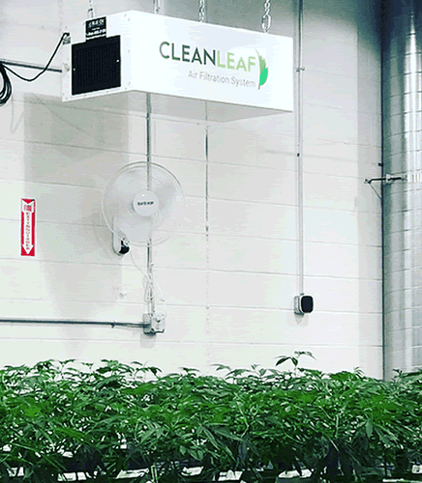
HEPA Air Filtration for Controlled Environment Agriculture
Summary
Controlled environment agriculture (CEA) facilities face unique air quality challenges that directly impact plant health, yield quality, and operational success. HEPA (High-Efficiency Particulate Air) filtration systems provide the surgical-grade air cleanliness required to protect plants from airborne threats including mold spores, powdery mildew, bacteria, and cross-contamination.
From commercial greenhouses and vertical farms to hydroponic operations and plant propagation facilities, HEPA air filtration systems have become essential infrastructure for maintaining sterile growing environments.
This comprehensive guide explores how HEPA technology protects horticultural operations, when to implement filtration systems, and best practices for maintaining optimal air quality in indoor plant cultivation facilities.
Table of Contents
Why Air Filtration Matters in Horticulture
Indoor plant cultivation facilities operate as controlled ecosystems where temperature, humidity, lighting, and air quality directly influence plant performance. Unlike outdoor agriculture, enclosed environments lack natural dilution from wind and fresh air, allowing airborne contaminants to accumulate and spread rapidly.
The Cost of Poor Air Quality
Airborne contamination creates multiple operational risks:
-
Crop Loss: Mold spores and fungal pathogens can circulate unchecked, leading to widespread infection and total crop failure.
-
Reduced Yields: Chronic exposure to low-level contamination stresses plants, slowing growth and reducing overall quality.
-
Cross-Contamination: Shared air between rooms or zones allows pathogens to move freely, undermining sanitation and biosecurity protocols.
-
Operational Disruptions: Outbreaks often require shutdowns, remediation, and restart procedures that halt production and impact revenue.
Prevention Through Filtration
HEPA air filtration systems reduce these risks by continuously removing airborne contaminants before they reach plant surfaces. Preventive filtration is consistently more cost-effective than addressing contamination after it becomes established.
Understanding HEPA Technology for Agriculture
HEPA filtration was developed for environments where airborne contamination is unacceptable. In horticulture, this technology addresses one of the most persistent challenges of indoor growing: recirculated air that allows microscopic threats to persist and multiply.
What Makes HEPA Filtration Different in Plant Cultivation
HEPA filters remove particles through multiple physical mechanisms as air passes through densely packed fibers:
-
Larger particles are stopped because they cannot pass between fibers
-
Mid-sized particles impact fibers as airflow rapidly changes direction
-
Ultrafine particles, including bacteria and spores, move unpredictably and eventually adhere to filter media
This multi-mechanism capture process removes contaminants before they settle on plants, equipment, or irrigation systems.
HEPA Efficiency Explained for Growers
A filter qualifies as True HEPA only if it removes 99.97% of airborne particles at 0.3 microns, the most penetrating particle size.
This threshold is especially relevant in horticulture because:
-
Mold spores are typically several microns in size
-
Powdery mildew spores are lightweight and easily airborne
-
Many plant-pathogenic bacteria exist at micron and sub-micron scales
Capturing these particles in the air prevents infection before symptoms ever appear.
Advanced V-Bank HEPA Design
Modern horticultural air filtration systems often use V-bank HEPA filters with pleated channels that expand surface area while maintaining airflow. Benefits include:
-
Higher air circulation rates in large grow spaces
-
Reduced resistance and quieter operation
-
Longer service life due to increased dust-holding capacity
-
Stable performance across the filter’s lifespan
Common Airborne Threats in Growing Environments
Understanding airborne risks clarifies why HEPA filtration has become standard in commercial cultivation.
Mold and Fungal Spores
-
Botrytis (Gray Mold): Rapidly spreads through air systems, causing rot and widespread crop loss.
-
Powdery Mildew: Settles on plant surfaces, reducing photosynthesis and marketability.
-
Fusarium and Verticillium: Produce airborne spores capable of lingering in facilities for years.
Bacterial Contaminants
Airborne bacteria cause leaf spots, blights, and systemic infections. In propagation environments, contamination of mother plants can compromise entire production cycles.
Environmental Particulates
Dust and Debris: Block stomata and provide surfaces for pathogens.
Pollen: Causes unwanted pollination in flowering crops.
Insect-Borne Pathogens: HEPA filters remove the microscopic organisms insects transport, even if insects themselves are excluded by other controls.
External Contamination Sources
Contaminants enter facilities through outdoor air, staff movement, incoming plant material, and adjacent operations.
How HEPA Filters Protect Plant Health
HEPA filtration serves as the primary airborne defense in controlled environment agriculture.
Continuous Air Purification
HEPA systems recirculate air multiple times per hour, removing:
-
Mold spores and fungal pathogens
-
Bacteria and microbial contaminants
-
Dust, pollen, and fine particulates
-
Cross-contaminants from adjacent zones
Continuous filtration maintains stable air quality throughout all growth stages.
Creating Sterile Growing Environments
Propagation rooms, tissue culture labs, and mother plant areas rely on HEPA filtration to achieve cleanroom-level conditions required for:
-
Micropropagation and cloning
-
Disease-free genetic preservation
-
Seedling protection during early development
Protecting Critical Growth Stages
Young plants and flowering crops are most vulnerable to airborne infection. HEPA filtration reduces risk during these high-impact stages.
Preventing Facility-Wide Outbreaks
By removing pathogens before they circulate, HEPA systems prevent contamination from spreading through shared air handling infrastructure.
Applications in Controlled Environment Agriculture
HEPA filtration supports a wide range of horticultural operations, including:
-
Vertical farms with dense plant populations
-
Commercial greenhouses during closed ventilation periods
-
Hydroponic and aeroponic systems with exposed root zones
-
Fully sealed indoor cultivation facilities
-
Propagation, nursery, and tissue culture operations
-
Research and breeding facilities
-
High-value and specialty crop production
HEPA Performance Standards for Horticulture
MERV-rated filters are designed for general HVAC use:
-
MERV 13–16 filters capture some fine particles but allow significant bypass
-
HEPA filtration exceeds MERV performance entirely, delivering near-total removal of plant-threatening particles
For controlled agriculture, partial filtration is insufficient. HEPA is used when prevention is the objective.
Why HEPA Outperforms Alternative Air Purification Technologies
HEPA filtration physically removes contaminants rather than attempting to neutralize them. Compared to UV-C or oxidation-based systems:
-
Performance does not depend on exposure time
-
No byproducts or secondary emissions are produced
-
Microbial resistance is not a factor
-
Captured particles are permanently contained
For high-value crops, physical removal remains the most dependable approach.
True HEPA
Only filters independently tested and certified at 99.97% efficiency qualify as True HEPA. “HEPA-type” products do not meet this standard and should not be used for commercial plant protection.
HEPA and Carbon Filtration for Grow Rooms
Why Many Grow Facilities Need HEPA and Carbon Filtration
In controlled environment agriculture, air quality challenges rarely exist in isolation. Facilities often face biological contamination risks and odor or gas concerns at the same time.
That’s why many commercial grow operations deploy combined HEPA and activated carbon filtration instead of relying on a single technology.
HEPA filtration protects plants by removing airborne biological threats:
-
Mold spores
-
Powdery mildew
-
Bacteria
-
Cross-pollination
-
Fine dust and debris
Activated carbon filtration addresses gaseous and odor-related issues:
-
Strong plant odors
-
Volatile organic compounds (VOCs)
-
Terpenes
-
Ethylene gas that can accelerate plant aging
When HEPA Alone Is Not Enough
HEPA filters remove particles, not gases.
In high-density grow rooms, urban locations, or facilities with odor-sensitive neighbors, filtration must also control what can’t be captured by particle filters alone.
Carbon filtration becomes essential when:
-
Odor complaints are a regulatory or community risk
-
VOCs or terpenes are present
-
Ethylene management is required for plant health and storage
Integrated HEPA + Carbon Systems
Rather than installing separate systems, many cultivators choose all-in-one, multi-stage filtration units designed specifically for grow environments.
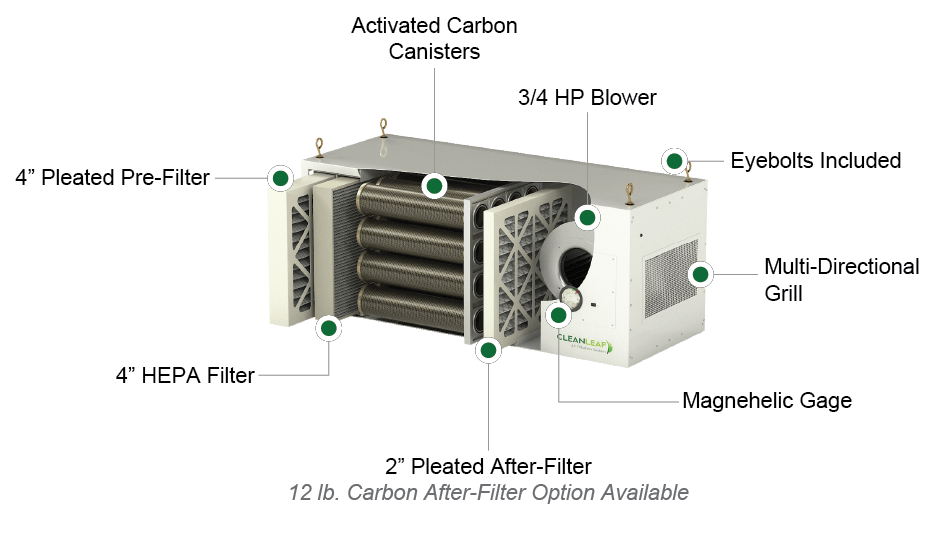
CleanLeaf’s All-Inclusive Series grow room air cleaners combine:
-
HEPA-saving pre-filtration
-
High-efficiency HEPA filtration
-
Large-volume activated carbon canisters
-
Final after-filtration before air re-enters the grow space
This integrated approach allows facilities to:
-
Protect plants rom airborne pathogens
-
Control odors and gases simultaneously
-
Reduce system complexity and maintenance overlap
-
Maintain consistent air patterns within sealed environments
Explore The All-Inclusive Series
Multi-Stage Filtration Systems
Effective horticultural air cleaning relies on multi-stage filtration to remove contaminants progressively, protect critical filters, and maintain consistent air quality throughout grow cycles.
While filtration goals vary by application, commercial cultivation facilities typically deploy one of two proven multi-stage approaches depending on whether odor and gas control is required in addition to particulate and biological protection.
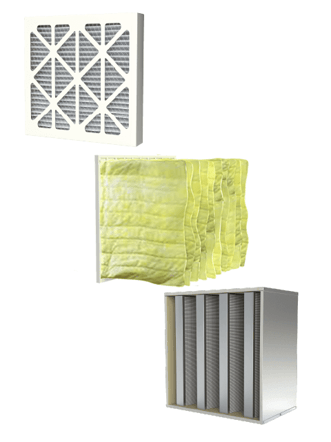 Typical HEPA-focused Filtration Stages:
Stage 1 – Pleated Pre-Filter (MERV 10)
Captures larger particulate such as dust and debris before it reaches downstream filters.
-
Protects higher-efficiency filters from premature loading
-
Typical replacement: every 1–3 months
Stage 2 – Bag Filter (MERV 15)
An intermediate filtration stage that removes small to medium-sized particulate.
-
Extends HEPA filter lifespan
-
Captures up to 95% of targeted particulate
-
Typical replacement: every 6–12 months
Stage 3 – HEPA After-Filter (High-Capacity V-Bank)
Provides the final level of air purification before air re-enters the space.
-
99.99% efficient at capturing ultra-fine particulate
-
V-bank design increases surface area without restricting airflow
-
Typical replacement: up to every 2 years
Integrated HEPA + Carbon Filtration
In grow rooms where plant health protection and odor or gas control must occur simultaneously, integrated HEPA and carbon filtration systems are preferred.
These systems address both airborne biological threats and gaseous contaminants within a single, unified filtration architecture.
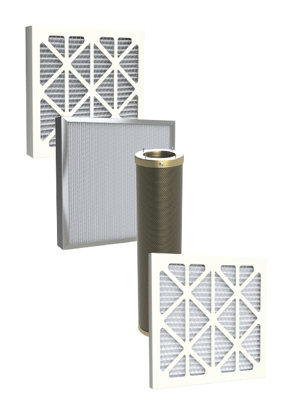 All-Inclusive Series Four-Stage Filtration Architecture:
Stage 1 – HEPA-Saving Pre-Filter (MERV 10)
Removes larger particulate to protect downstream filters and extend HEPA life.
-
Typical replacement: every 1–3 months
Stage 2 – HEPA Filtration (95% D.O.P. @ 0.3 microns)
Serves as the primary biological protection layer.
-
Captures mold, mildew, bacteria, and fine particulate
-
Helps prevent powdery mildew and cross-pollination
-
Typical replacement: every 6–12 months, depending on loading
Stage 3 – Odor-Absorbing Carbon Canisters
Activated carbon canisters remove contaminants HEPA filters cannot capture.
-
Absorbs odors, VOCs, terpenes, and ethylene gas
-
Each canister contains 7 lbs. of activated carbon
-
Typical replacement: annually, depending on odor intensity
Stage 4 – Pleated After-Filter (MERV 10)
Final filtration stage that polishes air before recirculation.
-
Captures residual particulate downstream of carbon filtration
-
Typical replacement: every 6–12 months
System Sizing and Air Changes
Regardless of filtration architecture, performance depends on proper system sizing and air change rates, not filter efficiency alone.
Recommended Air Changes Rates
-
Propagation and mother rooms: 15–25 air changes per hour
-
General growing areas: 8–15 air changes per hour
-
Processing areas: 6–10 air changes per hour
Final system selection should account for:
-
Room volume and ceiling height
-
Plant density and growth stage
-
Airflow patterns and equipment placement
Proper sizing ensures contaminants are removed efficiently without creating stagnant zones or unnecessary energy load.
Choosing the Right Multi-Stage Approach
Both filtration architectures serve critical roles in controlled environment agriculture:
-
HEPA-only systems prioritize sterility and biological control
-
HEPA + carbon systems provide comprehensive air cleaning when odor and gas control are also required
Selecting the appropriate approach depends on application requirements, environmental constraints, and facility objectives.
Maintenance and Filter Replacement
Recommended Replacement Intervals
-
Pre-filters: 1–3 months
-
Intermediate filters: 3–6 months
-
HEPA filters: 12–24 months, depending on loading
-
Carbon filters: 6–12 months
Pressure differential monitoring provides the most accurate indicator of replacement timing.
Why Washable “HEPA” Filters Are Not Suitable
Washable filters cannot maintain true HEPA efficiency. Washing damages filter media, creates leakage pathways, and increases contamination risk during handling. Commercial operations should treat HEPA filters as single-use components.
Continuous Operation
HEPA systems should operate continuously throughout grow cycles to prevent contamination spikes, especially during high-humidity nighttime periods.
Protecting Your Horticultural Investment
HEPA air filtration protects crops, genetics, infrastructure, and operational continuity. For modern controlled environment agriculture, it has evolved from an enhancement into essential infrastructure.
For expert guidance on implementing HEPA air filtration systems tailored to your operation, contact a qualified air filtration specialist for consultation and system design.
FAQs: HEPA Filters and Plant Cultivation
Do grow rooms need both HEPA and carbon filtration?
Many commercial grow rooms benefit from using both. HEPA filtration removes airborne biological contaminants like mold, bacteria, and pollen, while carbon filtration removes odors, VOCs, terpenes, and ethylene gas. Facilities concerned with plant health and odor control often require both technologies.
Can one air cleaner handle both mold prevention and odor control?
Yes. Multi-stage grow room air cleaners that combine HEPA and activated carbon filtration are designed to address both biological contamination and gaseous pollutants in a single system.
Will HEPA filtration eliminate existing mold in a grow room?
No. HEPA filtration is preventive, not curative. Existing mold issues must be remediated before HEPA systems can prevent reinfection by removing airborne spores.
Are HEPA filters effective in high-humidity grow environments?
Yes. HEPA filters function in high humidity, but moisture increases particulate loading. Proper pre-filtration and routine monitoring are recommended to maintain performance.
Does carbon filtration affect airflow in grow rooms?
High-quality carbon systems are engineered to maintain airflow while providing sufficient dwell time for odor and gas adsorption. Proper system sizing is critical.
How often do HEPA and carbon filters need to be replaced in grow rooms?
Typical replacement intervals:
-
Pre-filters: every 1–3 months
-
HEPA filters: every 6–24 months, depending on loading
-
Carbon filters: every 6–12 months, depending on odor intensity
Can HEPA and carbon filtration replace other biosecurity controls?
No. Air filtration supports biosecurity but does not replace sanitation, hygiene protocols, quarantine procedures, or plant health monitoring.
You may also like:
- PCO vs. HEPA Air Filtration
- HEPA Air Filtration for Commercial Applications
- Air Filtration Systems vs. Air Purifiers