Clear the Air: Why Choose CleanLeaf for Woodshop Air Filtration?
Summary
Whether you run a professional cabinet shop or a weekend hobbyist space, wood dust is an unavoidable byproduct of the craft. What many woodworkers don't realize is that the most dangerous particles are the ones you can't even see. CleanLeaf woodshop air filtration systems are built to capture those invisible threats — protecting carpenters, cabinet makers, furniture builders, DIYers, and sawing machine operators from the serious health risks associated with wood dust, chips, and airborne debris.
QUICK SUMMARY
- Wood dust is generated during all woodworking processes, sanding produces the finest and most dangerous particles.
- The most harmful particles are invisible to the naked eye, smaller than a tenth the diameter of a human hair.
- OSHA's PEL for softwood dust is 5 mg/m³ over an 8-hour workday; NIOSH recommends a much stricter 1 mg/m³.
- CleanLeaf air filtration systems remove airborne wood dust by exchanging shop air 8-10 times per hour.
- Multiple units installed in a pattern create circular airflow that cleans the same air repeatedly for maximum protection.
Table of Contents
Why Wood Dust Is a Serious Workplace Hazard
If you work part-time or full-time in a woodworking shop, you already know dust is everywhere. It billows into the air during cuts, clogs machines, and settles on floors, fixtures, and surfaces throughout the shop. Some woodworkers reach for compressed air to clean equipment, but this actually makes things worse, stirring up microscopic particles that are the most dangerous to breathe.
When properly controlled, wood dust and airborne contaminants are captured before they reach workers' respiratory zones. Without that control, the consequences can include respiratory problems, skin and eye irritation, heightened allergic reactions to wood dust and sawdust, irreversible lung injuries, and cancer.
How Wood Dust Is Generated in the Shop
Not all woodworking operations create dust the same way. There are two primary mechanisms:
- Shattering — occurs almost exclusively during sanding, breaking wood cells into extremely fine particles. This produces the highest dust concentrations and the smallest, most respirable particle sizes.
- Chipping — occurs during sawing and milling, where whole wood cells are displaced. Particles are generally larger but still pose significant inhalation risk.
Sanding is by far the greater respiratory concern, which is why woodshops that do heavy finishing work need robust air filtration most urgently.
What Makes Wood Dust Chemically Complex?
Wood dust isn't just wood. It can consist of complex biological and chemical material, including:
- Natural substances such as tannins and aldehydes found within the wood itself
- Processing chemicals added during treatment, finishing, or manufacturing
Tannin concentrations are significantly higher in hardwoods than softwoods, which contributes to why hardwood dust carries a higher regulatory burden. This chemical complexity is part of why wood dust exposure is governed by specific occupational health regulations, not just general particulate standards.
OSHA & NIOSH Exposure Limits for Wood Dust
Two key regulatory thresholds define acceptable wood dust exposure in the workplace:
OSHA PEL: 5 mg/m³ respiratory exposure over an 8-hour workday for softwood dust. This is the legally enforceable limit. Shops operating above this level are required to take corrective action.
NIOSH REL: 1 mg/m³ over an 8-hour workday. NIOSH recommends this significantly stricter standard to better protect workers from long-term health effects.
It's worth noting that the most harmful particles, those small enough to penetrate deep into lung tissue, are invisible to the naked eye, less than a tenth of the diameter of a human hair. Meeting the exposure limit isn't just about what you can see settling on surfaces; it's about what workers are breathing that they can't see at all.
How CleanLeaf Woodshop Air Filtration Works
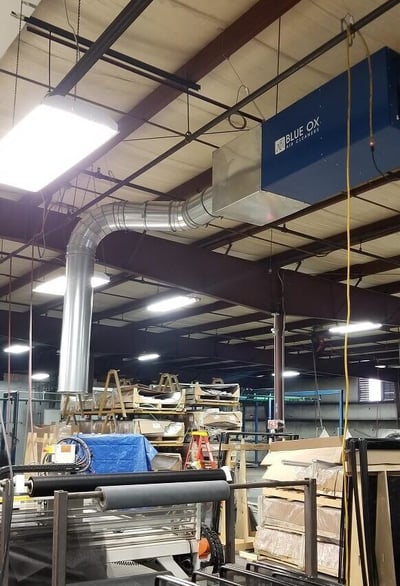
CleanLeaf woodshop air filtration systems use a large centrifugal fan or blower to draw contaminated shop air into the unit and through specialized filter media. The filters capture wood dust, fine particles, chips, and other airborne debris before returning clean, recirculated air to the workspace.
Key performance characteristics:
- Exchanges the air in a woodshop up to 8 times per hour
- Captures particles that bypass dust collectors and land in the general breathing zone
- Available in multiple configurations and sizes to suit shops of all types, from small hobbyist spaces to large commercial operations
- Designed to work alongside (not replace) dust collection systems and PPE for a complete protection strategy
Why Unit Placement and Quantity Matter
Woodshop air filtration systems are most effective when deployed as a team, not as a single unit. Installing the right number of CleanLeaf units in a deliberate pattern creates circular airflow throughout the shop, cleaning the same air multiple times as it cycles through. This dramatically improves overall air quality compared to a single unit working in isolation.
The number of air exchanges your shop requires will vary based on:
- Shop size and ceiling height
- Types of woodworking operations being performed
- Volume and frequency of dust-generating activity
- Existing dust collection infrastructure
CleanLeaf specialists can help you determine the right configuration for your specific environment.
Real-World Results: CleanLeaf in Action
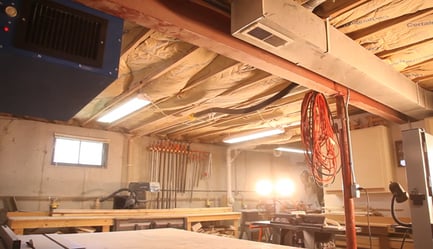 Olde Dog Woodworking put CleanLeaf air filtration systems to the test in a working woodshop environment.
The results demonstrated how the right filtration setup, properly sized and positioned, can meaningfully reduce airborne dust levels and create a cleaner, safer workspace for everyone in the shop.
For the full story, see the Olde Dog Woodworking case study
Building a Complete Woodshop Dust Control Plan
Air filtration alone is powerful, but the safest woodshops layer multiple strategies:
- Dust Collection at the Source: Connect tools to dedicated dust collectors or shop vacs to capture the bulk of chips and coarse particles before they become airborne.
- Avoid Compressed Air for Cleaning: Blowing down machines with compressed air redistributes fine particles into the breathing zone. Use vacuums instead.
- CleanLeaf Ambient Air Filtration: Captures the fine residual dust that escapes point-of-source collection and circulates in the general shop air.
- Personal Protective Equipment (PPE): Properly rated dust masks or respirators, safety glasses or goggles for all woodworking operations.
- Regular Maintenance: Keep filter media clean and replace on schedule to maintain system performance.
Together these layers ensure that wood dust is controlled at the source, captured in the air, and filtered before it reaches the people doing the work.
FAQs: Silica Dust Control
Why is wood dust dangerous in a woodworking shop?
Wood dust isn't a simple, inert material, it's chemically complex, containing natural compounds like tannins and aldehydes as well as processing chemicals absorbed during treatment and finishing. The most dangerous particles are invisible to the naked eye, smaller than a tenth the diameter of a human hair.
These fine particles bypass the body's natural defenses and penetrate deep into lung tissue, where they can cause respiratory disease, irreversible lung damage, and cancer over time. Hardwoods carry a higher risk than softwoods due to elevated tannin concentrations, which is reflected in the stricter regulatory attention they receive.
What is the OSHA exposure limit for wood dust?
OSHA's legally enforceable permissible exposure limit (PEL) for softwood dust is 5 mg/m³ over an 8-hour workday. Shops with measured exposure above this level are required by law to take corrective action.
NIOSH recommends a much stricter limit of 1 mg/m³—reflecting the growing understanding of how fine particles affect long-term lung health.
CleanLeaf air filtration systems help shops work toward the more protective NIOSH standard, not just the regulatory minimum.
How does CleanLeaf woodshop air filtration work?
CleanLeaf units use a large centrifugal fan or blower to pull contaminated shop air through specialized multi-stage filter media. The filters capture wood dust, fine particles, chips, and other debris before returning clean, recirculated air to the workspace.
Systems are designed to exchange the air in a woodshop up to 8 times per hour, continuously cleaning the ambient air that workers breathe throughout their shift.
How many air filtration units does my woodshop need?
There's no one-size-fits-all answer. The right number of CleanLeaf units depends on your shop's square footage, ceiling height, the types of woodworking operations you perform, and what dust collection infrastructure you already have in place.
What's clear is that multiple units working together, positioned to create circular airflow, are significantly more effective than a single unit. CleanLeaf specialists can evaluate your shop and recommend the right configuration.
Is air filtration a replacement for dust collection?
No, and it's not meant to be. Dust collectors and shop vacs are designed to capture bulk chips and coarse particles at the point of generation, right at the tool.
CleanLeaf ambient air filtration handles what gets away: the fine, invisible particles that escape source collection and circulate in the general shop air. The two systems work together. Relying on either one alone leaves meaningful gaps in your dust control strategy.
Which woodworking operations produce the most dangerous dust?
Sanding is the biggest concern. Because it shatters wood cells rather than chipping them out, sanding produces the finest particle sizes and the highest dust concentrations, the conditions most dangerous to the respiratory system.
Sawing and milling generate coarser particles that are easier for the body to filter naturally. Shops that do significant finishing and sanding work have the most urgent need for robust ambient air filtration.
Can I use compressed air to clean my woodshop equipment?
This is a common practice, but it's counterproductive from an air quality standpoint. Blowing down machines with compressed air doesn't remove dust from the shop, it just displaces it, sending fine particles back into the breathing zone where they linger for extended periods.
Vacuuming equipment is the safer alternative. For particles already airborne, that's where CleanLeaf ambient filtration does its job.
You may also like:
- Air Filtration vs. Ventilation: What You Need to Know
- Air Filtration Systems vs. Air Purifiers
- Olde Dog Case Study: Wood Shop Dust Removal