Air Filtration Filter Replacement Schedules: Optimizing Performance and Cost
Summary
As consumer demand for clean, high-quality cannabis grows, cultivators face increasing pressure to adopt sustainable, contaminant-free growing practices. This guide covers everything commercial cannabis cultivators need to know, from organic soil selection and integrated pest management to air quality control and post-harvest handling, to produce a safer, purer product while staying ahead of tightening regulatory requirements.
Table of Contents
Filter Lifespan by CleanLeaf Configuration
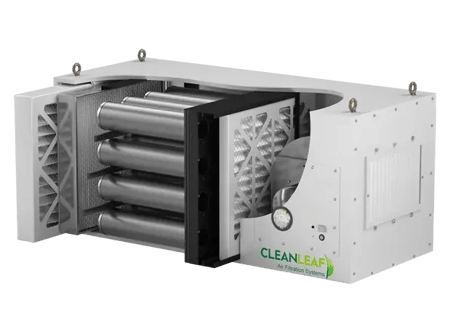
CleanLeaf air filtration systems are available in multiple configurations, each designed for a specific contaminant type and application environment. Replacement requirements vary accordingly. The guidelines below reflect general schedules, your specific facility conditions may require more or less frequent changes.
General Use Systems
- 1" Pleated Pre-filter: every 1–3 months
- Pocket Bag Filter (65% or 95%): every 6–12 months
Watch for: Visible dust accumulation on the pre-filter, reduced airflow, or rising static pressure readings.
Carbon Filter (CF) — Light Odor Control
- 1" or 4" Pleated Pre-filter: every 1–3 months
- Pocket Bag Filter (65% or 95%): every 6–12 months
- 2" Charcoal Afterfilter: every 3–6 months, depending on odor load
Watch for: Noticeable reduction in odor control, breakthrough odors returning to the space, or visible saturation of the charcoal media.
Carbon Module (CC) — Heavy Odor Control
- 1" or 4" Pleated Pre-filter: every 1–3 months
- 95% Pocket Bag Filter: every 6–12 months
- 18 lb or 36 lb Carbon Module: every 6–12 months, depending on contaminant load
Watch for: Return of noticeable odors, decreased odor control efficiency, or carbon reaching its saturation point.
HEPA (HE) — Clean Room Applications
- 1" or 4" Pleated Pre-filter: every 1–2 months
- 95% Pocket Bag Filter: every 6–9 months
- 99.99% HEPA Afterfilter: every 12–24 months
Watch for: Any decline in required air quality standards, increased particulate levels in testing, or a significant pressure drop across the HEPA filter stage.
Wrap-Around Filter (WA/WAL/WAR) — Large Particulate Environments
- Wrap-Around Fiber Pre-filter: clean every 2–4 weeks, replace when fiber deteriorates
- 4" Pleated Pre-filter: every 2–4 months
- 65% Bag Filter: every 6–12 months
Watch for: Heavy dust accumulation that cannot be removed through cleaning, visible damage to the filter media, or a measurable drop in airflow.
Factors That Affect Filter Lifespan
No two facilities are identical, and several variables can significantly accelerate or extend how long your filters last between replacements.
Contaminant Type and Concentration
Heavy dust environments — woodshops, metalworking facilities, processing floors — require more frequent pre-filter changes. Strong odor environments such as cigar lounges and cannabis cultivation facilities accelerate carbon saturation. Finer particulates like welding fumes can penetrate pre-filters faster, shortening bag filter life as a result.
Operating Hours
A system running 24 hours a day, 7 days a week will consume filter capacity significantly faster than one operating only during business hours. Tracking actual operating hours rather than calendar time gives you a more accurate and cost-effective basis for scheduling replacements.
Airflow Settings
Higher CFM settings push more air — and more contaminants — through your filters per hour. Running CleanLeaf units at maximum capacity will shorten filter life compared to moderate settings, particularly for pre-filter and carbon stages.
Environmental Conditions
Humidity levels affect carbon filter efficiency and can accelerate degradation. Seasonal changes introduce fluctuating pollutant loads — pollen in spring, wildfire smoke in late summer — and temperature variations can impact filter media performance and longevity.
How to Optimize Your Replacement Schedule for Cost Efficiency
The Progressive Filtration Strategy
CleanLeaf systems use a multi-stage filtration approach where each filter stage protects the one downstream from it. This hierarchy is the foundation of cost-efficient filter management:
- Pre-filters are the least expensive stage and should be replaced most frequently — they intercept larger particles and shield everything downstream
- Bag filters capture finer particulate and last significantly longer when pre-filters are properly maintained
- Specialty filters — HEPA and carbon modules — are the most expensive stages and deliver their full service life only when the upstream stages are doing their job
Neglecting pre-filter replacements is one of the most common and costly maintenance mistakes in commercial air filtration. The expense of a prematurely replaced HEPA or carbon module far exceeds the cost of the pre-filters that would have protected it.
Filter Monitoring Methods
Visual inspections — Regularly examine pre-filters for dust accumulation between scheduled replacement intervals.
Pressure differential monitoring — Installing magnehelic gauges to measure pressure drop across filter stages is the most reliable way to know objectively when a filter needs replacement, regardless of its visual appearance.
Air quality testing — Periodic third-party testing confirms whether your system is performing to specification and can prevent both premature and overdue replacements.
Maintenance logs — Tracking replacement dates alongside air quality readings helps establish the optimal replacement pattern for your specific facility over time.
Cost-Saving Approaches
- Bulk purchasing — Pre-filters are replaced most frequently and are ideal candidates for volume purchasing to reduce per-unit cost
- Preventative maintenance contracts — Scheduled service agreements that include filter replacements at predetermined intervals reduce emergency purchases and ensure consistency
- Filter inventory management — Maintaining an on-site stock of essential filters eliminates costly delays when a replacement is needed
Application-Specific Replacement Recommendations
Cigar Lounges and Smoking Environments
Pre-filters in high-smoke environments may require replacement every 2–4 weeks. Carbon modules should be monitored closely for breakthrough odors, rotating modules from front to back can help maximize carbon utilization and extend service intervals.
Woodworking and Manufacturing
Wrap-around pre-filters in high-dust production environments should be cleaned weekly. Implementing a compressed air cleaning schedule for washable filter stages extends their service life. Monitor pressure drops closely, as rapid dust accumulation can significantly reduce airflow in short periods.
Clean Rooms and Healthcare Environments
Maintain strict replacement schedules regardless of visual indicators — what you cannot see can still compromise air quality in these environments. Document every filter change as part of your compliance protocol, and consider more frequent replacements during high-use periods or elevated contamination events.
Welding and Metalworking
Metal particulate accumulates quickly and can be abrasive to filter media. Monitor pre-filters closely and watch for any metal dust penetration to secondary filter stages. Developing a custom replacement schedule based on actual production volume will produce better results than a fixed calendar approach.
Cannabis Cultivation Facilities
Strong terpene and odor loads accelerate carbon saturation, and high airborne spore concentrations in cultivation environments shorten HEPA pre-filter cycles. HEPA stage maintenance is especially critical in facilities subject to microbial testing requirements — a degraded HEPA filter is a direct compliance risk.
Building a Filter Management Program
A structured filter management program transforms reactive maintenance into a predictable, optimized operational routine.
Establish Baseline Measurements
- Document initial pressure readings across each filter stage when newly installed
- Set pressure threshold values that trigger replacement — typically a 1–2" w.g. increase over baseline
- Record initial air quality metrics so future performance can be measured against a known standard
Create a Monitoring Schedule
- Daily — Visual check of pre-filters in high-concentration environments
- Weekly — Brief system performance review covering airflow, operating noise, and odor control effectiveness
- Monthly — Thorough filter inspection with pressure differential measurements across all stages
- Quarterly — Full system evaluation and filter replacement as indicated by monitoring data
Train Maintenance Personnel
Effective filter management depends on the people performing it. Ensure your team understands proper filter handling procedures to avoid introducing contamination during replacement, correct installation techniques that prevent bypass air from circumventing filter stages, and how to recognize the early signs of filter saturation or media failure.
Document Everything
Maintenance records should capture filter change dates, performance measurements before and after each replacement, the visual condition of removed filters, and any relevant environmental changes — such as increased production volume or seasonal shifts — that may have affected filter consumption.
The ROI of a Proper Maintenance Schedule
A well-executed filter replacement program delivers measurable returns across multiple operational dimensions:
- Extended equipment life — Properly maintained CleanLeaf systems deliver years of reliable service; neglected filtration degrades blower motors and internal components over time
- Lower energy consumption — Clean filters require significantly less fan power to maintain rated airflow, reducing electricity costs continuously
- Reduced replacement costs — Maximizing each filter's service life through proper upstream maintenance lowers total annual filter spend
- Consistent productivity — Stable air quality supports employee health, comfort, and operational continuity
- Regulatory compliance — Documented maintenance records demonstrate due diligence and support compliance with air quality and facility licensing requirements
FAQs: Air Cleaner Replacement Filters
How do I know when a filter actually needs to be replaced?
The most reliable indicator is pressure differential — measuring the pressure drop across a filter stage tells you objectively how restricted the media has become, regardless of how it looks. Visual inspection of pre-filters is a useful secondary check. For HEPA stages, any measurable increase in particulate levels from air quality testing is a clear replacement signal. When in doubt, consult the replacement intervals for your specific CleanLeaf configuration as a baseline.
What happens if I wait too long to replace a filter?
An overloaded filter restricts airflow, forcing the blower motor to work harder and consume more energy. In severe cases, a clogged pre-filter can cause bypass air to route around the filter media entirely, allowing unfiltered contaminants to reach downstream stages. For HEPA systems, a degraded filter directly compromises the particulate removal efficiency the system is rated for — which in compliance-sensitive environments creates real regulatory exposure.
Is it better to replace filters on a calendar schedule or based on performance monitoring?
Performance monitoring, particularly pressure differential tracking, is more accurate and typically more cost-efficient than a fixed calendar schedule, because it reflects actual filter loading rather than elapsed time. That said, calendar-based schedules are a reliable baseline when monitoring equipment isn't in place. The most effective approach combines both: scheduled inspections with replacement triggered by performance data rather than dates alone.
Can I clean and reuse filters instead of replacing them?
Wrap-around fiber pre-filters can be cleaned periodically to extend their service life, and this is recommended as part of a regular maintenance routine. Most other filter types: pleated pre-filters, bag filters, carbon modules, and HEPA afterfilters, are not designed for cleaning and should be replaced according to schedule. Attempting to clean non-washable media typically damages the filter structure and reduces its efficiency.
How does running my CleanLeaf system at higher CFM settings affect filter life?
Higher airflow settings push more air (and more contaminants) through your filter stages per hour, which accelerates loading across all filter types. Pre-filters and carbon stages are most immediately affected. If your application requires continuous high-CFM operation, adjusting your replacement intervals accordingly, particularly for pre-filter stages, will protect downstream filters and maintain system performance.
Do seasonal changes affect how often I need to replace filters?
Yes, meaningfully so. Spring introduces elevated pollen loads that accelerate pre-filter and HEPA stage loading. Summer wildfire seasons can dramatically increase fine particulate concentrations in affected regions. Humidity fluctuations affect carbon filter efficiency and can accelerate media degradation. Reviewing your replacement schedule at seasonal transitions, and adjusting intervals based on observed performance data, is a sound practice for any facility operating year-round.
Where can I order replacement filters for my CleanLeaf system?
Replacement filters for all CleanLeaf configurations are available directly through our website. Contact us for assistance identifying the correct filter specifications for your unit, bulk purchasing options, or to discuss a preventative maintenance program tailored to your facility and application.
You may also like: